
When Neutrality Became Symbolic: UWW’s Reversal on Russian and Belarusian Wrestlers
United World Wrestling’s decision to fully lift restrictions on Russian and Belarusian wrestlers closes a chapter that, from the beginning, often felt more symbolic than practical.
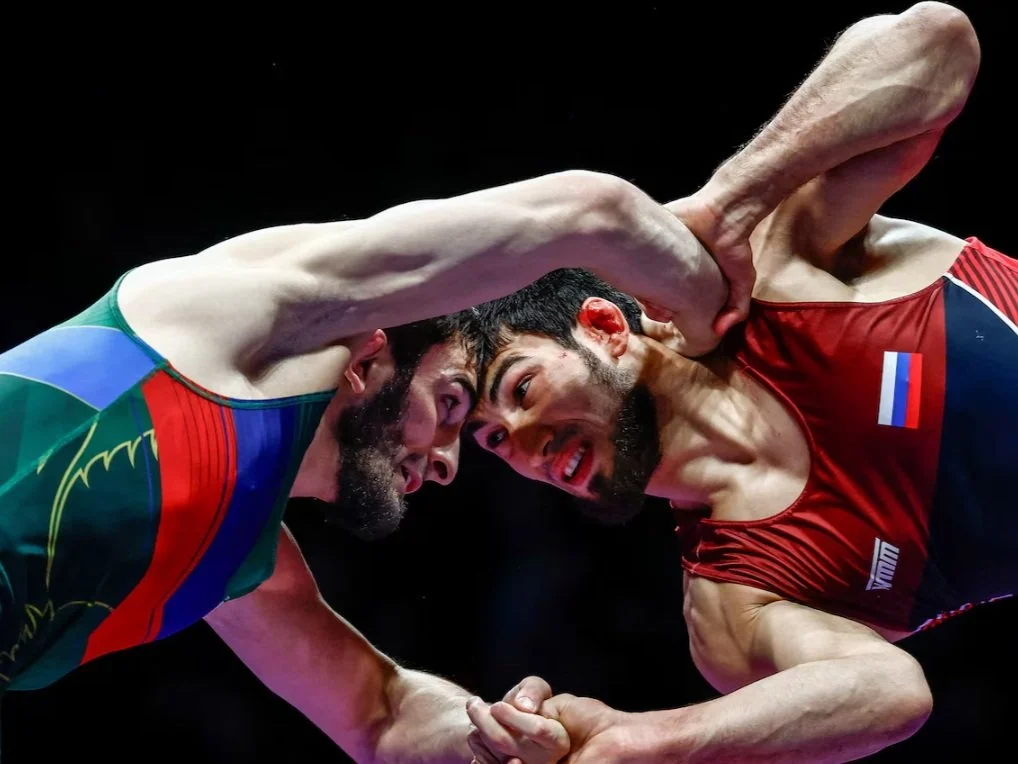
Shamil Mamedov competes against Abasgadzhi Magomedov in the 65kg men's final at the Russian Olympic Trials in Moscow - May 2024
For years, many of the world’s best wrestlers competed under the UWW flag as “neutral athletes.” Their national flags disappeared. Their anthems were removed. But the athletes themselves, their styles, coaches, histories, and identities remained entirely recognizable to everyone inside the wrestling world.
In a sport as personal and historically rooted as wrestling, nationality is not erased simply because a uniform changes color. Fans still knew who Abdulrashid Sadulaev was. Wrestlers still knew who they were preparing for. Coaches, federations, and audiences understood exactly which wrestling systems and traditions these athletes represented.
The restriction created a strange middle ground: athletes were allowed to compete, dominate tournaments, and stand on podiums but without the right to officially represent the countries everyone already associated them with.
UWW gradually softened these measures over time. In 2024, eligibility criteria were eased. In 2025, Russian and Belarusian wrestlers were permitted to compete under the UWW flag rather than as “Individual Neutral Athletes.” Now, in 2026, the remaining restrictions have been lifted entirely.
The progression itself raises an uncomfortable question: if the restrictions were always temporary and eventually reversible, what did they actually accomplish inside the sport?
This does not erase the political reality surrounding the war in Ukraine, nor the broader ethical debates international sport continues to face. But wrestling also exposed the limitations of symbolic restrictions in an individual combat sport where identities, reputations, and competitive histories cannot realistically be separated from the athletes themselves.
In practice, the wrestling world never stopped recognizing these athletes as Russian or Belarusian wrestlers. The flags disappeared. The recognition did not.
And that may be why the return now feels less like a dramatic change, and more like the formal acknowledgment of a reality that already existed on the mat.